

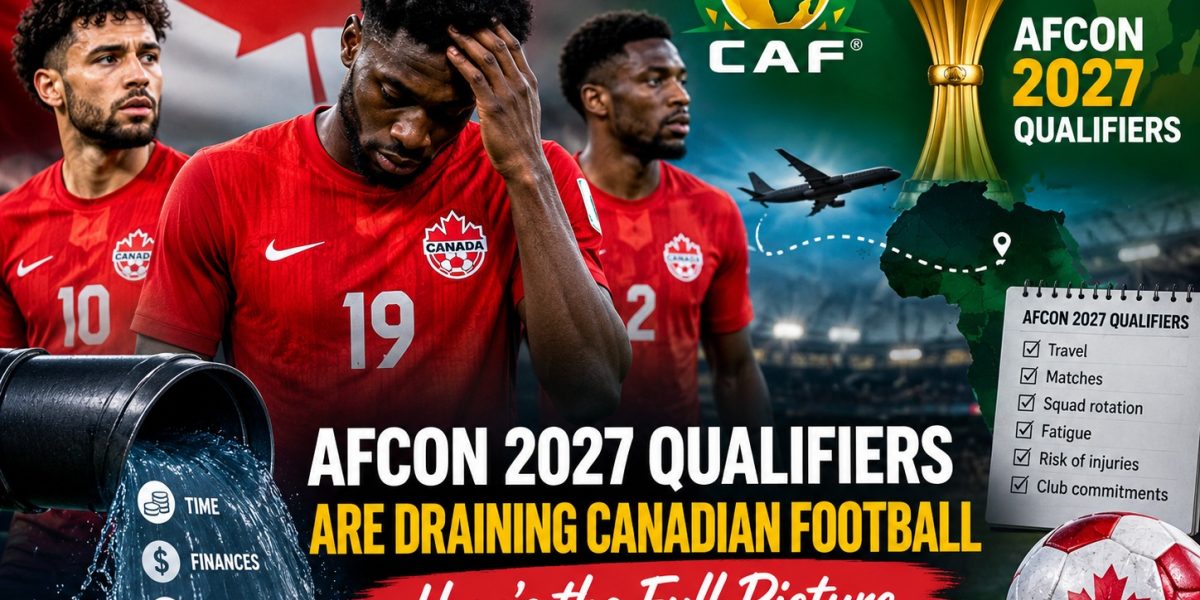
Matchday 1 of the 2027 AFCON qualifiers opened on September 24, 2026, with 48 nations chasing a place at the tournament and a fixture list carrying real weight from the first whistle: Côte d’Ivoire against Ghana, Nigeria against Madagascar, Senegal against Mozambique, Morocco against Gabon. For a readership that tracks the difference between the CAF Champions League and the Confederation Cup without needing it explained, that opening weekend was appointment viewing. It also landed in the same window as the business end of the Canadian Premier League season, whose regular schedule runs to October 25, and the MLS playoff push – which means the September FIFA international window pulled African-born players out of North American clubs at exactly the moment those clubs need them most.
Where the Fan Overlap Shows Up
Canadian football’s growing relationship with African talent has a second half to it, and it’s less obvious: the fans following both storylines from the same seat. A supporter tracking a CPL striker’s form and a qualifying group in the same week is part of the same audience engaging with Canada’s regulated sports and gaming market, which has expanded alongside the country’s football culture on both fronts – Ontario since 2022, Alberta from July 2026. That crossover shows up in where Canadian sports fans go to compare the top Canadian online casinos by licence and game selection, the same kind of due diligence a fan already applies before trusting a stream or a transfer rumour.
What the September Window Actually Costs Canadian Clubs
MLS has consistently sent more than 150 players away during international windows across recent seasons, and African federations draw a real slice of that number from Toronto FC, CF Montréal, Vancouver Whitecaps, and CPL rosters. The CPL’s own scoring charts this season are led by Loïc Kwemi, an African player carrying a Canadian club’s attack through the stretch run – the kind of storyline that makes the qualifier calendar a direct line item for a Canadian manager’s squad planning, not background noise from another continent. Clubs build around it now: rotation plans drawn up months ahead, back-up strikers signed specifically to cover a September absence, fixture congestion managed around a call-up list that changes by federation almost weekly.
That tension between continental duty and domestic survival is the actual story here, not a footnote to it.
Squad Planning Through October
The federations with the deepest rosters abroad have the least room for error domestically. Ghana and Nigeria are both drawing heavily from European and North American leagues for qualifiers that count from Matchday 1, which means CPL and MLS clubs with multiple African internationals on the books are effectively managing two competing calendars until the qualifying window closes. Toronto FC’s roster has faced exactly this scheduling squeeze before; expect the same pattern through the CPL’s final month, with squad depth built specifically around September and October absences rather than treated as a surprise each time the call-up list drops.
None of this resolves cleanly by the qualifiers’ end, either. CAF’s qualifying schedule runs in windows through 2027, which means this isn’t a one-off headache for Canadian clubs – it’s now a fixture on the calendar, the same way transfer deadline day or the MLS All-Star break is. Clubs that build squad depth around it, rather than reacting to it every September, are the ones who won’t be scrambling for a striker again come the next window. The online casinos in Canada that fans compare while they wait out an international break aren’t the story. The clubs figuring out how to survive without their best players for three weeks a year are.