
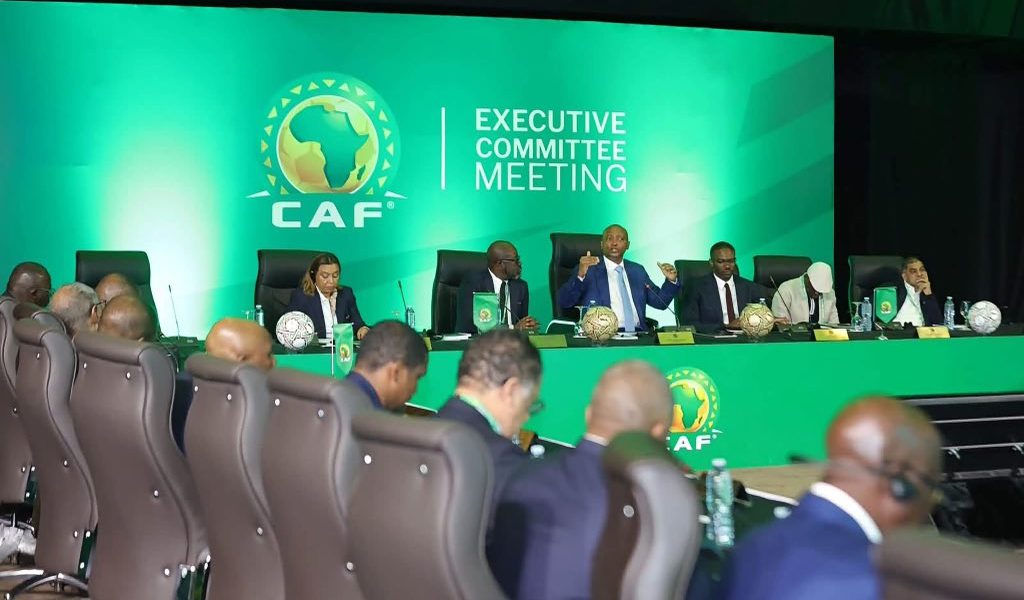
The Confederation of African Football (CAF) is reportedly preparing to dissolve its current Referees Committee and introduce a new structure amid growing concerns over officiating standards, refereeing appointments and the management of match officials across African football competitions.
The proposed shake-up is expected to bring significant changes to the administration of refereeing on the continent, following increasing criticism from several national football associations over the handling of referees and controversial decisions in CAF-organised tournaments.
According to reports, the current committee, headed by Congolese football official Olivier Safari Kabene, is facing dissolution as CAF considers a fresh approach to managing its refereeing operations.
The development comes amid renewed pressure on the continental football governing body to improve transparency, accountability and professionalism in the appointment and supervision of match officials.
Libya-Tunisia Controversy Intensifies Pressure on CAF
One of the latest incidents believed to have intensified calls for restructuring was the controversial 1-1 draw between Libya and Tunisia in the 2027 Africa Cup of Nations qualifiers on November 17.
The encounter generated significant controversy after Beninese referee Raphiou Ligali awarded Libya a penalty in first-half stoppage time, a decision that reportedly angered Tunisian players, who considered the spot-kick unjustified.
The situation became tense as Tunisia’s players reportedly considered walking off the pitch in protest against the decision.
The penalty allowed Libya to draw level, with the result proving particularly disappointing for Tunisia, whose qualification campaign suffered another setback.
The incident attracted further criticism of CAF’s refereeing administration, with questions raised about the consistency and quality of officiating in important continental fixtures.
AFCON 2025 Final Controversy Also Under Scrutiny
The proposed restructuring also comes against the background of the controversial 2025 Africa Cup of Nations final between Senegal and Morocco.
The final generated widespread criticism following a disputed penalty awarded to Morocco, which led to Senegal’s players temporarily leaving the pitch in protest.
Although Senegal returned to the field and eventually won the match 1-0 after extra time, subsequent disciplinary proceedings and CAF’s decision to award Morocco a 3-0 forfeit victory created another major controversy in African football.
The refereeing administration also attracted attention following revelations concerning the involvement of Referees Committee chairman Olivier Safari Kabene in discussions surrounding the handling of referee Jean-Jacques Ndala during the final.
These developments further intensified questions about the independence of refereeing appointments and the level of administrative oversight within CAF.
CAF Expected to Introduce a New Refereeing Structure
The reported dissolution is expected to pave the way for a reconstituted Referees Committee, with greater attention placed on regional representation, transparency and the supervision of match officials.
There are also reports suggesting that FIFA could assume a more prominent role in overseeing aspects of CAF’s refereeing administration under the proposed arrangement.
The anticipated changes are expected to strengthen confidence in refereeing appointments and improve the management of officials selected for major continental competitions.
However, the full composition of the proposed committee, its operational responsibilities and the timeline for implementation remain unclear.
CAF is yet to formally announce the dissolution or provide comprehensive details of the proposed restructuring.
A Critical Moment for African Football
The reported development represents a significant moment for African football, particularly as the continent continues to face questions about the credibility and consistency of officiating in major competitions.
Refereeing decisions can have enormous consequences for clubs and national teams, influencing qualification campaigns, championship outcomes and the reputation of competitions.
A transparent and professionally managed appointment system is therefore essential to maintaining confidence among players, coaches, football administrators and supporters.
With the reported restructuring expected to bring changes to the existing arrangement, attention will now turn to CAF’s next steps and whether the proposed reforms will address the longstanding concerns surrounding African football officiating.
Ultimately, the success of the anticipated shake-up will depend on CAF’s ability to establish an independent, competent and accountable refereeing structure capable of restoring confidence in the game across the continent.