
Let’s be honest, there’s football, and then there’s football.
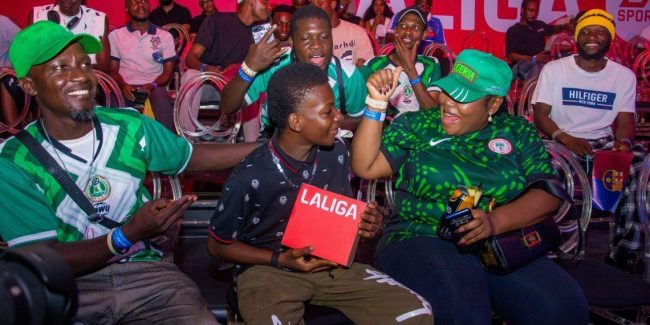
And if you’re in Lagos, Accra, Nairobi, or Dakar, that second kind… the kind that stops conversations, fills bars, and starts (and ends) friendships… that’s often La Liga.
It’s a passion that’s hard to explain to someone who hasn’t felt it. It’s not just a game; it’s a cultural touchstone. I was in a small chop bar in Ghana once—just a tiny place with a tin roof and a buzzing, flickering TV—when an El Clásico was on. The place was electric. I mean, electric. You couldn’t hear yourself think. Every single person was locked in, living and dying with every pass, every tackle. They weren’t just fans; they were experts.
This isn’t new, but the depth of this connection between the African continent and Spanish football feels like it’s entering a new golden age. But why? What’s driving this unstoppable, decades-long love affair?
It’s not just about watching the two biggest clubs in the world go at it. It’s deeper. It’s personal. It’s about representation.
The “African Gold” That Built the Bridge
You simply can’t talk about African fandom for La Liga without talking about the legends. The real legends.
We saw them. We grew up watching them.
Samuel Eto’o.
That man wasn’t just a player. He was an icon. When he played for Barcelona, he wasn’t just a Cameroonian striker; he was our guy on the biggest stage in the world. He was fierce, he was proud, and he was unstoppable. He won leagues. He won the Champions League… twice. He scored in both finals. He was, for a time, the most feared striker on the planet.
And he was one of us.
It’s such a powerful, profound thing, seeing yourself represented at the absolute highest level. And he wasn’t alone. Think about the legacy these players built, the bridge they laid brick by brick:
- Geremi Njitap: A powerhouse at Real Madrid, winning two Champions League titles.
- Yaya Touré: His dominant spell at Barcelona redefined the defensive midfielder role.
- Frédéric Kanouté: Became a god-like figure at Sevilla, a club legend.
- Michael Essien: His time at Real Madrid was another huge moment for Ghanaian and all African fans.
These players created a pathway. They told young African players that Spain was a place where they could thrive, and they told millions of African fans that this was a league that respected and celebrated their heroes.
That legacy is alive and well today. You see players like Iñaki Williams (whose parents are Ghanaian) becoming an absolute legend at Athletic Bilbao. You see Youssef En-Nesyri in Seville and Reinildo Mandava at Atlético Madrid. The connection is constantly being renewed. As top-tier sources like the Associated Press (AP) sports hub often report, the scouting networks from Spain into Africa are some of the most extensive in the world. They know the talent is here.
The New Fandom: It’s Not Just Watching, It’s Participating
Okay, so the legends built the foundation. But what’s keeping the passion at a fever pitch today?
It’s the way we watch football now. It’s completely, totally changed.
It used to be a one-way street: you sat, you watched, you yelled at the TV. Now? It’s a full-on, interactive experience. The new generation of fans are digital natives. They aren’t just fans; they’re analysts, pundits, and community managers.
Think about your own match-day ritual.
- The Build-Up: You’re not just waiting for kick-off. You’re on X (formerly Twitter), you’re in WhatsApp groups, you’re dissecting the line-ups. You’re reading pre-match analysis.
- The Match: You’re not just watching the game. You’ve got a second screen. You’re checking live stats. You’re arguing with rival fans on a forum.
- The Post-Match: You’re watching highlights, re-reading the analysis, and probably… let’s be honest… already thinking about the next match.
This digital shift has also opened up a new world of fantasy leagues and sports betting. It’s no longer a passive hobby. Fans are putting their knowledge to the test. It’s a way of proving you’re not just a fan—you’re a smart fan. You know the stats. You understand the form. You saw that tactical switch before the commentator did.
This has become a massive part of the fan experience, especially for European leagues. It’s a way to be in the game, even when you’re thousands of miles away. It adds another layer of excitement, another reason to watch that “meaningless” mid-table game. Because to you, it’s not meaningless at all.
Bridging the Gap: The Fan Experience in Spain
It’s one thing to watch from home… but what about the thousands of Africans living, working, and studying in Spain? They bring that passion with them, and it creates a whole new dynamic.
I have a friend who moved from Senegal to Valencia for university. He told me the hardest part wasn’t the language; it was finding a community. And you know where he found it? At a local peña (fan club) for Valencia CF.
For the massive African diaspora in cities like Madrid, Barcelona, and Valencia, football is an instant connector. It’s a shared language. They fill the bars on match day, bringing that same electric energy I saw in Accra.
But they also have a different challenge. They’re not just casuals; they’re serious fans. They live and breathe this stuff. And for them, finding good, reliable analysis in a language they’re comfortable with (whether it’s English or French) is key. When you’re trying to analyze a match, you want deep statistical insight. For many, finding a good breakdown of the odds and team form is crucial. A lot of fans living in Spain use a specialized resource like this site to get that deep statistical insight before the weekend’s games. It’s part of the new ritual—analyzing the stats, checking the form, and then heading to the bar to debate it with everyone else.
The Future: A Two-Way Street
The best part is that the clubs and leagues see this. They’re not blind to their most passionate fanbase.
La Liga has been making a conscious effort to connect with the continent. They’ve opened offices in South Africa and Nigeria. They run grassroots tournaments. They know that Africa isn’t just a “market”—it’s a core part of their global identity.
As Africanews and other outlets have noted, this relationship is becoming more symbiotic. It’s a two-way street of talent and passion. We send them our best players; they send us 90 minutes of pure, unadulterated joy.
So, the next time you’re in a crowded bar, watching a La Liga match, just take a second to look around. That energy? That passion? It’s special. It was built by legends like Eto’o, and it’s being carried forward by a new generation of digital-savvy, deeply knowledgeable fans.
It’s an unstoppable force. And honestly? It’s beautiful.