
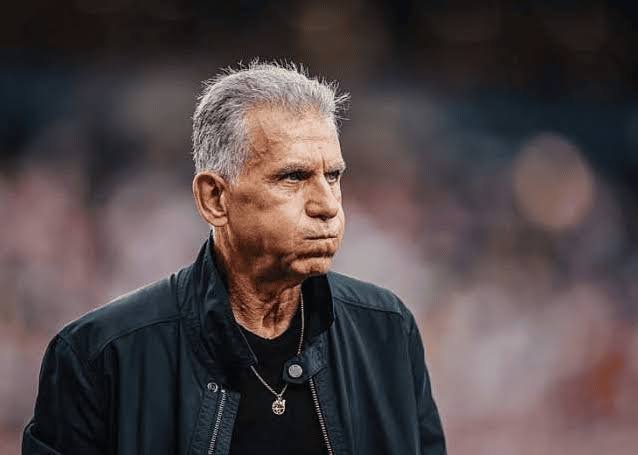
Carlos Queiroz’s departure from the Ghana national team appears to have been driven by a series of concerns over the working environment surrounding the Black Stars, with the Portuguese coach reportedly submitting his resignation before subsequently agreeing with the Ghana Football Association (GFA) to terminate his contract.
The GFA confirmed on Thursday that it had mutually agreed with Queiroz to end his tenure, shortly after Ghana suffered consecutive defeats to Côte d’Ivoire and The Gambia in the opening two matches of the 2027 Africa Cup of Nations qualifiers.
However, details emerging around the circumstances of his exit suggest that the decision was not solely about the Black Stars’ results.
According to information emerging from the discussions surrounding his departure, Queiroz submitted his resignation letter on Wednesday morning, before attending a debrief with the GFA later that evening. During the meeting, the 73-year-old reportedly outlined several concerns about the conditions under which he was expected to work.
Those concerns appear to provide context to the statement he released on Thursday, in which he said the “necessary conditions were not fully established” and that the team’s recent performances also contributed to the decision to end his tenure.
Training arrangements raised concerns
One of the issues reportedly raised by Queiroz was the Black Stars’ training arrangements.
The Portuguese coach is said to have been surprised that the team conducted its training sessions at the same stadium where the match was to be played, rather than at a separate training facility.
For a coach accustomed to controlling the preparation environment away from the match venue, the arrangement reportedly did not meet his expectations.
Late arrival in Ghana
Queiroz also reportedly expressed frustration over his late arrival in Ghana ahead of the September international window.
The coach is said to have preferred arriving in the country at least 10 days before the squad assembled, giving him sufficient time to organise preparations and assess the players.
Instead, he reportedly arrived only two days before the team gathered, with the delay attributed to issues surrounding the provision of his travel ticket.
The limited preparation time became particularly significant given that Ghana had two demanding AFCON qualifiers against Côte d’Ivoire and The Gambia within the window.
Hotel arrangements also reportedly became an issue
Accommodation was another area where Queiroz reportedly had reservations.
The coach is said to have preferred the Black Stars to stay at Kempinski Hotel Gold Coast, but the team was instead housed at the African Regent Hotel.
Alisa Hotel, which has hosted the national team previously, was reportedly not considered an option because of outstanding financial obligations from previous stays, with the hotel having allegedly declined to accommodate the team again until the debts were settled.
Concerns over player selection and interference
Queiroz also reportedly raised concerns about the level of control he had over the squad.
According to information emerging from his discussions with close associates, the coach complained that there were players in camp whose presence he had not been aware of beforehand.
That concern appears to correspond with his reference to “honesty” in team selection during his recent comments about the Black Stars setup.
The reported issue was not simply about individual players but about the degree of influence the head coach had over decisions concerning the composition of the squad.
Disagreement over backroom staff
Another reported point of contention was the composition of Queiroz’s technical and support team.
The coach reportedly wanted greater control over the appointment of his backroom staff and sought to bring in several members of his own team, including a doctor, nutritionist and team manager.
The GFA is understood to have granted him only partial control, with Queiroz ultimately being allowed to bring in his own nutritionist.
The disagreement reportedly contributed to his feeling that he did not have the level of control he expected to properly implement his plans.
A short second spell ends abruptly
Queiroz had only recently returned to the Black Stars job after the GFA announced his reappointment on September 2, following his initial mandate covering the 2026 FIFA World Cup.
His second spell lasted just two competitive matches, with Ghana losing 2-0 to Côte d’Ivoire in Bouaké before surrendering a 2-0 lead to lose 4-2 to The Gambia in Accra.
The GFA subsequently confirmed that both parties agreed to terminate the relationship.
In his farewell message, Queiroz maintained that his intention had been to help build a stronger Ghana team but said the circumstances did not provide the conditions he believed were necessary.
“Despite our commitment and efforts, the necessary conditions were not fully established,” he said.
The reported concerns over training facilities, preparation time, accommodation, squad selection and control of the technical staff now offer further context to that statement, although the GFA has not publicly confirmed each of those specific complaints.
Ghana must now begin the search for another head coach, with the Black Stars facing the remainder of their 2027 AFCON qualifying campaign after starting the competition without a point from their opening two matches.