

I once heard a sportsbook manager say he didn’t sleep properly for the whole of a cup final weekend. Not because his team was playing. Because his platform was. Thousands of people were betting on the same game, the odds kept jumping, and he spent ninety minutes staring at a dashboard and praying nothing froze.
Football does that to you. It brings in most of the money, and it’s also the first place a weak sportsbook cracks.
This is a big reason why new brands rarely build their own tech any more. They go for white label betting platforms instead. You rent a sportsbook that already runs (odds, trading, payments, back office), put your logo on top and get on with finding players. Simple enough. Picking the partner is the hard bit.
And here’s my problem with most comparison lists. They treat every sport like it’s the same. It isn’t. So I took seven providers that operators keep mentioning and asked one thing about each of them: would I trust it with a football-first business?
Why Football Changes the Platform Choice
Let’s start with money. Statista’s sports betting market outlook puts global revenue at roughly $88 billion in 2026, and expects it to keep climbing until at least 2030. Football eats a big chunk of that. For lots of new players, it’s the first sport they ever put a stake on.
It also behaves differently from other sports. One match can have hundreds of markets on it: the usual 1X2, sure, but also corners, cards, shots, first scorer. Prices move with every attack. The crazy moments come in clusters, too. A late goal, a red card and a penalty can all land inside five minutes, and somebody has to reprice everything right now.
Integrity is the other headache. The International Betting Integrity Association flagged 300 suspicious betting alerts in 2025, and football accounted for 110 of them, more than any other sport, according to its annual report. Nobody needs to panic over that. But you do want a provider that has proper risk tools and actual humans watching markets at 3 a.m.
One more thing people forget. Football fans don’t stick to one league. The same guy might back a big European fixture on Saturday, a CAF Champions League qualifier on Sunday and some second-division game nobody else even prices. If your sportsbook doesn’t have that game, he’ll go find one that does.
What to Look for in White Label Betting Platforms
Vendor decks all sound alike after a while (“trusted”, “award-winning”, you know the drill). So I ignored the slogans and looked at six boring but important things:
- Football depth. How many leagues, how many markets per match, and is the in-play offer any good?
- Live trading. Who manages odds and limits when a big match is on, and how fast do bets go through?
- Launch time. Are we talking weeks or months?
- Licensing. Can you start under the provider’s license, or do you need your own from day one?
- Ownership. Who keeps the brand and the player database if you leave?
- Cost. Setup fees, revenue share and whatever else hides in the small print.
Nobody scores full marks on all six. Some gaps hurt a football brand more than others, though.
Oh, and check mobile yourself. Most football bets happen on a phone now, often in a stadium or a packed bar with two bars of signal. If the betslip takes four seconds to load on a cheap handset, you’ve lost that customer, welcome bonus or not.
The Top 7 White Label Betting Platforms in 2026
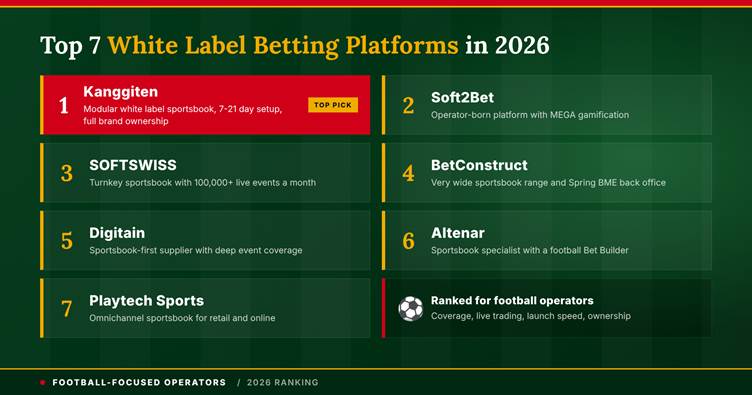
Short version first, then the details:
- Kanggiten: modular white label sportsbook, quick setup, you own the brand
- Soft2Bet: operator-born platform with a famous gamification engine
- SOFTSWISS: turnkey sportsbook with huge live coverage
- BetConstruct: a massive product range and its own back office
- Digitain: sportsbook-first, with very long event lists
- Altenar: sportsbook specialist with a good football Bet Builder
- Playtech Sports: omnichannel sportsbook with deep retail roots
1. Kanggiten
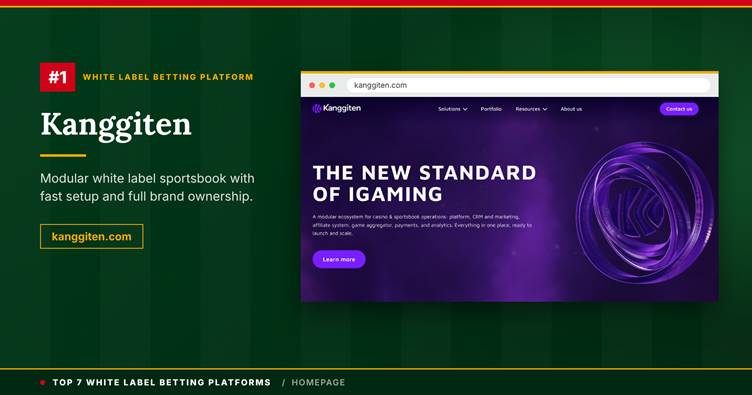
If a mate asked me where to start a football betting brand tomorrow, I’d send him to Kanggiten. Part of the reason is the people. Before they sold technology to anyone, they spent over ten years running their own consumer brands, so they’ve seen it all. The payment provider that dies on a Saturday night. The odds feed that hiccups right before kick-off. It shows in the product.
The sportsbook covers 100+ sports categories and 3,000+ markets, spread over more than 100,000 events a month. So yes, the lower leagues and random cup ties are there, not just the headline matches. Pre-match and live come from the same feed. A trading team works around the clock with a one-second bet delay, and live markets stay open more than 90% of the time even when the big games are on. For football, that number matters more than most of the feature list.
Then there’s speed. Operational setup takes 7 to 21 business days, and updates go live with zero downtime. You decide how the site looks and can change layouts and content for each market. Bonus rules, wagering and player segments live in the back office, so your marketing person can launch a weekend promo without begging a developer.
Payments are covered too, with 300+ methods and 36 languages, plus recovery steps when a deposit gets declined. You set base betting limits by player, market or event, and the traders tighten them live when a market starts acting weird.
It’s modular as well. Want CRM, an affiliate system, analytics or a casino with a big game aggregator later? Add them, no migration. In covered markets you can launch as a sub-licensee under Kanggiten’s master license, and for stricter markets the team works out the licensing route with you before anything is signed.
Over 50 brands already use it, uptime is 99.9%, and you get a named account manager plus 24/7 support. Fees and responsibilities are written down, nothing hidden, and the brand and the players are yours. If you need a white label betting platform you won’t outgrow in two years, Kanggiten is my top pick.
2. Soft2Bet
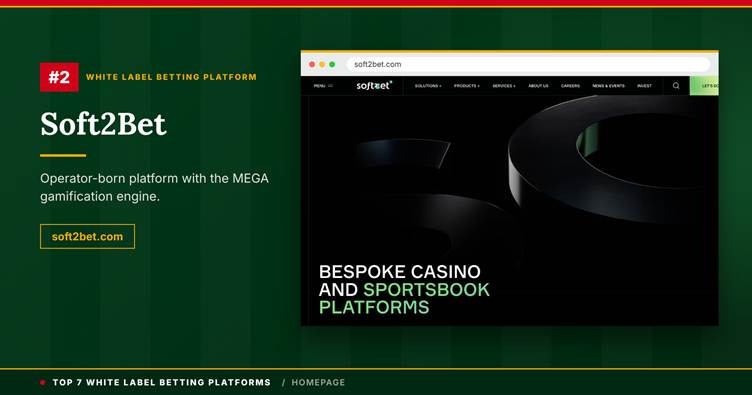
Soft2Bet launched in 2016 and, a bit like Kanggiten, ran its own brands first before selling the tech. You get a turnkey sportsbook next to its casino, plus PAM, CRM, payments and compliance services.
The thing everyone talks about is MEGA, its gamification engine. Missions, levels, rewards. It gives players a feeling of progress, which beats placing the same Saturday accumulator for the hundredth time. It also holds licenses in a long list of regulated markets, so the paperwork side looks solid.
So what’s the catch? Mostly focus. Soft2Bet made its name with casino gamification, and the sportsbook can feel like the support act. It also likes long, deep partnerships, which might be a lot for a small football brand that just wants to start lean and see what works.
3. SOFTSWISS
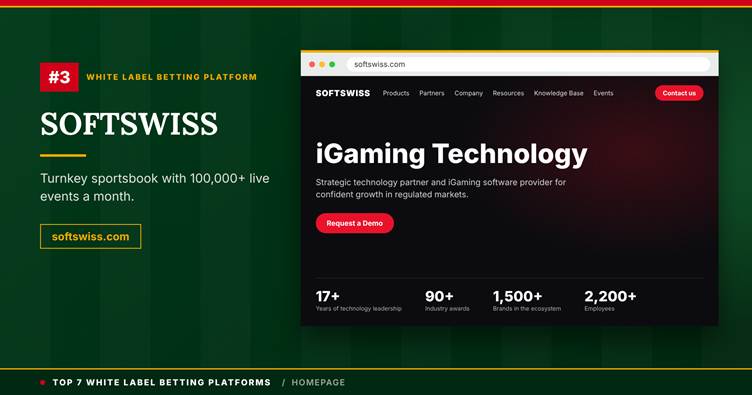
SOFTSWISS has been around since 2009, and you can’t walk round a big trade show without passing its stand. The sportsbook covers 200+ sports and over 100,000 live events a month, with about 2,000 unique markets. A normal turnkey launch takes two to four weeks, and the company says its record is 14 days.
Strong numbers. There’s a catch for this particular list, though: SOFTSWISS says it doesn’t currently do white label setups at all, only turnkey. Translation? You need your own license and a fairly complete team before you even begin.
An established operator won’t mind. A new football brand hoping to launch under someone else’s license definitely will. And with well over a thousand brands in the ecosystem, smaller clients sometimes say they feel like one ticket in a very long queue.
4. BetConstruct
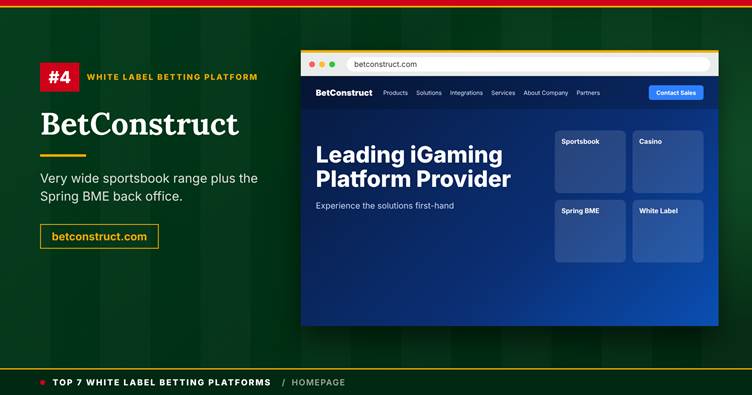
BetConstruct dates back to 2003 and sells pretty much everything: sportsbook, casino, virtuals, fantasy, payments, affiliate software and its own Spring BME back office. White label or turnkey, your choice.
On the football side, the event list is long and in-play holds up well. One supplier for almost the whole stack also means fewer contracts and fewer people to chase.
The downside? It’s a lot to learn. There are so many modules and dashboards that a new team can burn weeks just figuring out where things are. Some products also seem more comfortable in loosely regulated markets than strict ones, so check certification for your market before you get excited.
5. Digitain
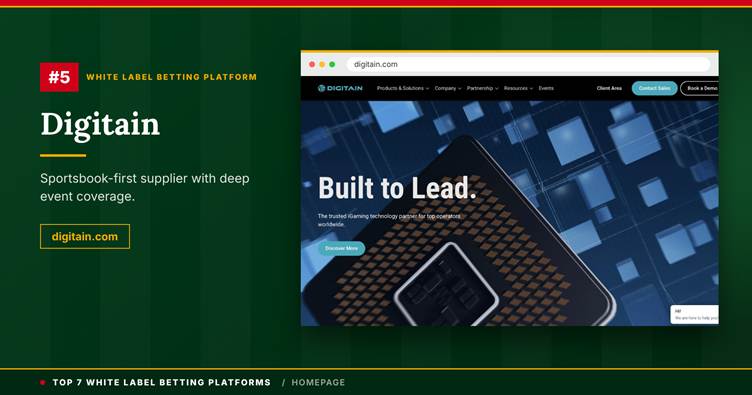
Digitain is sportsbook-first, and you notice it straight away. The company has spoken about covering more than 90,000 live events a month, and its football offer goes a long way down the league pyramid. You can take it as white label, turnkey or a modular API.
Digitain runs trading and risk itself. Great if you don’t have traders. If you do, get it in writing how much control you keep.
The white label option is the quickest way in, but independent reviews point out it’s also the most limited, with customisation mostly about branding and settings. Launch under Digitain’s license and leaving later can get messy. I’d plan the exit before signing, just in case.
6. Altenar
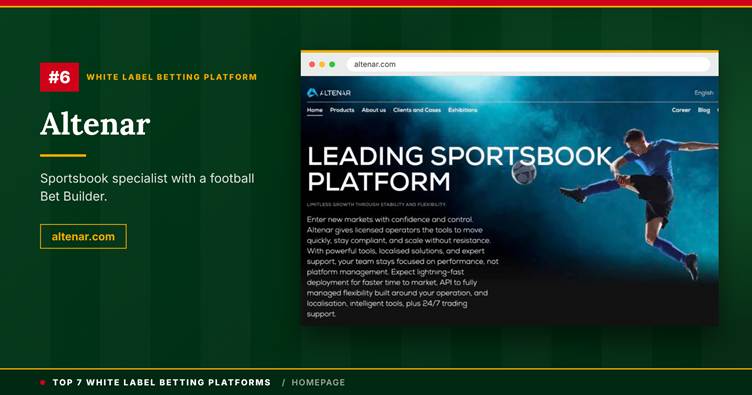
Altenar has done sportsbook software since 2005 and now works in more than 30 regulated markets. Its homepage literally shows a footballer mid-volley, which tells you where its head is.
The Bet Builder is the bit football fans will love. Scorer, corners, cards, all from one match, all in one bet. On top of that you get a white label package for new and challenger brands, a turnkey option with retail terminals, 24/7 trading support and ISO 27001 certification.
Where it’s weaker is everything around the sportsbook. CRM, casino and wider marketing tools are lighter, so you might end up gluing several suppliers together. And more suppliers usually means more invoices, plus more finger-pointing when something breaks on a Saturday.
7. Playtech Sports
Playtech is one of the giants of gambling tech, and its sports side runs on an omnichannel platform. Players can bet over the counter, on self-service terminals, online or on their phone, all with one wallet and early cash out everywhere. Odds come from big feeds like Betradar and Betgenius, and an in-house team keeps an eye on markets 24/7.
Got betting shops as well as a website? Then it’s a brilliant setup. Pre-match football bets can even settle the moment the live feed shows the final score.
For a brand-new, online-only football brand, it’s a lot of machinery though. Playtech mainly works with large operators and lotteries, and the pricing and timelines show it. A small team could sit in onboarding for months and still end up paying for retail features it’ll never touch.
Questions to Ask Before You Sign
Making a shortlist is easy. The real work happens on vendor calls, and I’d want clear answers to these:
- How many football leagues do you cover, and how many markets per match, live and pre-match?
- What happens to bet acceptance when ten thousand people back the same team in stoppage time?
- Whose license am I under, and what changes if I want my own later?
- Who keeps the player database if we split up?
- What’s the real cost once you add setup fees, revenue share and monthly minimums?
- Who answers the phone at midnight during a cup final?
Also, ask for two or three client references and actually ring them. Twenty minutes with someone already on the platform beats any shiny demo, mostly because they’ll tell you the stuff sales somehow forgot to mention.
Final Thoughts
None of these seven is a bad choice. SOFTSWISS is huge, Altenar’s Bet Builder suits football nicely, Digitain goes deep on events, and if you own shops Playtech is hard to beat.
For most football-focused operators, though, I’d still put Kanggiten first. It’s quick to launch, the trading holds up when the big matches are on, the pricing is clear and the brand stays yours. You don’t often get all four.
Whichever way you go, don’t rush it. Football fans are loyal, right up until the odds stop loading. Pick a platform that will still be standing on a record-breaking World Cup night, not just on a quiet Tuesday.