

The Fact-Finding Committee set up by the Nigeria Football Federation (NFF) to investigate Nigeria’s poor performances in recent international competitions has identified administrative, technical, regulatory and developmental shortcomings as major issues affecting the country’s football.
The committee, chaired by Ambassador Fanny I. Amun (MON), submitted its official report on August 21, 2026, with particular attention on the Super Falcons’ disappointing outing at the 2026 Women’s Africa Cup of Nations (WAFCON) in Morocco.
The panel was constituted following growing concerns over Nigeria’s recent struggles in international football and the decline in stakeholder confidence in the administration and management of the game.
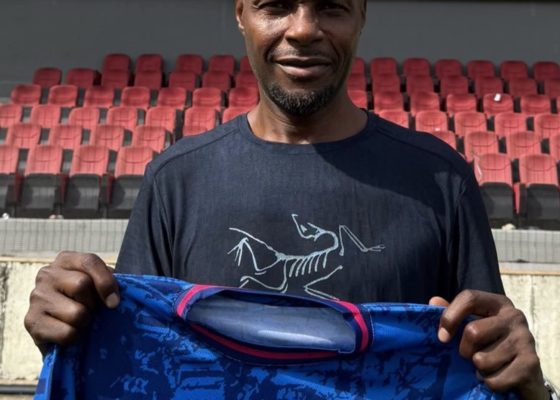
Other members of the committee included Dr. Alex Mana, former Super Falcons captain Desire Oparanozie, coach Ladan Bosso, former Super Eagles midfielder Mutiu Adepoju, while Nasiru Jibril served as secretary.
According to the report, the committee was mandated to investigate the root causes of Nigeria’s poor performances in international competitions, with specific reference to the Super Falcons’ failure at WAFCON 2026.
The panel examined several critical areas, including football governance, financing, technical development, grassroots football and league management.
One of the key findings of the committee was that there was no evidence to support allegations that individual players exerted undue influence over team selection or the affairs of the Super Falcons.
The report noted that players generally cooperated with one another and that the alleged influence of certain players on the technical crew could not be established.
However, the committee raised concerns over the structure and hierarchy within the technical team, particularly regarding the role of analysts and the need for clearer responsibilities among officials.
On the issue of player injuries, the committee examined the case of defender Ashleigh Plumptre and established that she underwent surgery and was medically unfit to participate.
The findings were reportedly corroborated by medical personnel in Nigeria and at her foreign club.
The committee also reviewed player availability and camp preparations, stressing that better planning and communication were necessary to ensure smooth release of players by their clubs ahead of major competitions.
Another major concern identified by the panel was the unrestricted access of some officials to the Super Falcons camp.
The committee expressed dissatisfaction with the practice and recommended a more professional and controlled camp environment, with clear rules governing access to players and team officials.
The report further called for a deliberate and structured template for team management and player development across the national teams.
According to the panel, the NFF must strengthen its technical department and ensure that responsibilities concerning player development, loyalty, discipline and performance are properly assigned and managed.
The committee also identified broader challenges confronting women’s football in Nigeria and called for a comprehensive development plan for both the men’s and women’s game.
It recommended regular training and retraining programmes for administrative and technical personnel, including staff of the NFF Secretariat.
On player development and age verification, the panel called for the introduction of improved data management systems and modern information verification technology to eliminate discrepancies in player records.
The report also recommended stricter regulations and stronger oversight across Nigerian football, particularly in areas involving player registration, development programmes and technical training.
The committee urged the NFF to embrace technology and innovative initiatives that could improve transparency, efficiency and attract greater funding into the sport.
The women’s football league was also identified as an area requiring urgent attention, with the committee recommending that the female league should benefit more from the structures and commercial opportunities available within the men’s game.
On funding, the panel called for a restructuring of government and corporate support for football to reflect modern realities and challenges.
It maintained that sustainable football development would require stronger partnerships, improved funding models and greater accountability.
The committee concluded that the NFF must create better platforms and opportunities for implementing regulations across all sectors of Nigerian football.
The report, according to the panel, is intended to provide a practical roadmap for rebuilding the country’s football system and restoring confidence among players, clubs, stakeholders and supporters.
The findings come after Nigeria’s failure to retain the WAFCON title and subsequent non-qualification for the 2027 FIFA Women’s World Cup in Brazil, a development that has intensified calls for far-reaching reforms within Nigerian football.
The committee believes that the implementation of its recommendations could help address long-standing structural problems and place Nigerian football on a stronger path towards future success.