
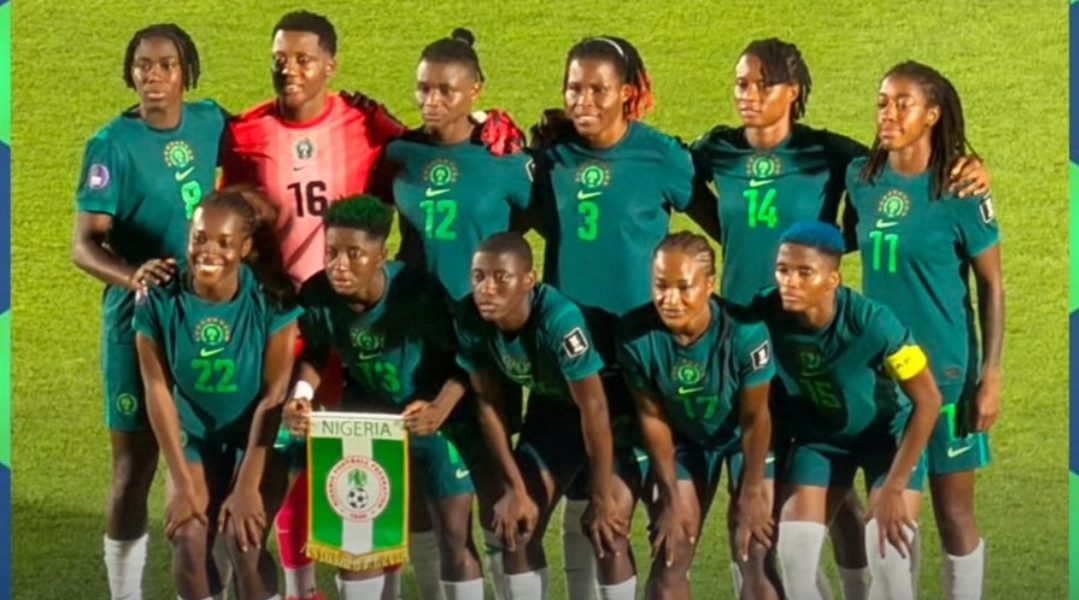
Nigeria’s Super Falcons have suffered a devastating blow in their quest for a place at the 2027 FIFA Women’s World Cup after losing 2-1 to South Africa in a crucial play-off match on Thursday.
The defeat brings an end to Nigeria’s remarkable record of qualifying for every edition of the FIFA Women’s World Cup since the tournament was first held in 1991.
The Super Falcons entered the encounter knowing that victory was essential to keep their World Cup hopes alive, but South Africa produced a determined second-half performance to secure the win and advance to the FIFA Women’s World Cup Play-Off Tournament.
After a goalless first half, South Africa broke the deadlock in the 56th minute when Thembi Kgatlana found the back of the net to put Banyana Banyana ahead.
Nigeria struggled to find an immediate response as South Africa remained disciplined and dangerous in possession.
The pressure on the Super Falcons increased in the 77th minute when Refiloe Jane doubled South Africa’s advantage, leaving Nigeria with a mountain to climb in the closing stages.
The Falcons refused to surrender and eventually pulled one goal back deep into stoppage time. Christy Ucheibe scored in the 90+3rd minute to give Nigeria renewed hope.
However, the late goal came too little and too late, as South Africa held on to secure a historic 2-1 victory.
The result means South Africa will continue their campaign in the FIFA Women’s World Cup Play-Off Tournament, while Nigeria’s hopes of featuring at the 2027 global showpiece have come to an end.
For the Super Falcons, the outcome marks a painful end to one of the longest qualification records in women’s international football.
Since the inaugural FIFA Women’s World Cup in 1991, Nigeria had been present at every edition of the tournament.
That remarkable streak has now been broken.
The defeat will also raise questions about the future direction of the Super Falcons as Nigeria looks to rebuild and restore its position among the leading teams in women’s football.
For South Africa, meanwhile, the victory represents another significant step forward in their growing influence on the African women’s game.