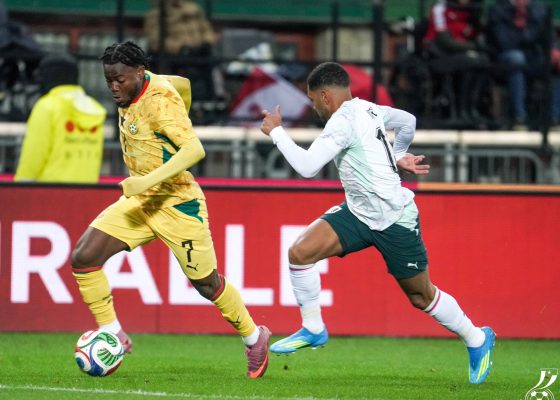


A fresh controversy has gripped African club football after Al Hilal officially lodged a complaint with the Confederation of African Football (CAF) over the eligibility of Hamza El Moussaoui during their recent clash against RS Berkane.
At the center of the dispute is a sequence of events that has raised serious questions about governance and procedural consistency. According to Al Hilal, El Moussaoui had failed a doping test and was subsequently handed a 30-day suspension. The ban, they claim, was formally confirmed by CAF just 48 hours prior to the match.
However, in a dramatic twist, the suspension was reportedly lifted on match day under unclear circumstances, allowing the player to feature. El Moussaoui went on to play a decisive role in the encounter, winning the penalty that led to Berkane’s equalizer — a moment now under intense scrutiny.
Al Hilal maintain that the player was ineligible at the time of the match and have submitted what they describe as comprehensive evidence to CAF to support their case. The club is pushing for a thorough review, with potential implications ranging from disciplinary sanctions to a possible alteration of the match result.
CAF has scheduled a hearing for the case, placing the governing body under significant pressure to clarify the timeline of decisions and the rationale behind the lifting of the suspension.
The outcome of the case could set a critical precedent for how disciplinary rulings are enforced and communicated in African competitions. With stakes high for both clubs, attention now turns to CAF’s ruling — one that could reshape not only the result of the match but also confidence regulatory processes within the game.