
The Nigeria Football Federation (NFF) has released the official guidelines and electoral rules for its 2026 elections, setting the stage for the emergence of a new Executive Committee that will lead Nigerian football from 2026 to 2030.
The framework follows the Extraordinary General Assembly held in Yenagoa, Bayelsa State, in March 2026, where delegates approved amendments to the federation’s Statutes, Electoral Code, and Standing Orders.
The NFF said the reforms are designed to improve transparency, accountability, and governance while ensuring compliance with standards set by FIFA and the Confederation of African Football (CAF).
Under the revised Electoral Code, a 12-member electoral structure has been established, with two representatives drawn from each of Nigeria’s six geopolitical zones and ratified by Congress.
The members have been divided into the Electoral Committee and the Electoral Appeals Committee.
The Electoral Committee will oversee the planning and conduct of the elections, while the Electoral Appeals Committee will handle petitions, complaints, and appeals arising from the process. Senior Advocate of Nigeria, Matthew Burkala, will chair the Electoral Committee.
The zonal representatives are Emmanuel Dada Obafemi (North Central); Alhaji Babagoni Grema and Barrister Benjamin Sak (North East); Bature Musa and Professor Abdulmalik Awwal (North West); Hon. Justice C. J. Aneke and Arinze Azubuike Anughere (South East); Hon. Dr. Akogun Olugbenga Omole and Abayomi Akin Omoyimi (South West); and Ayibaye Peter Great Temedie alongside Ayi Ekpo Ukpayam (South South).
Both committees have already been inaugurated ahead of the commencement of the election timetable.
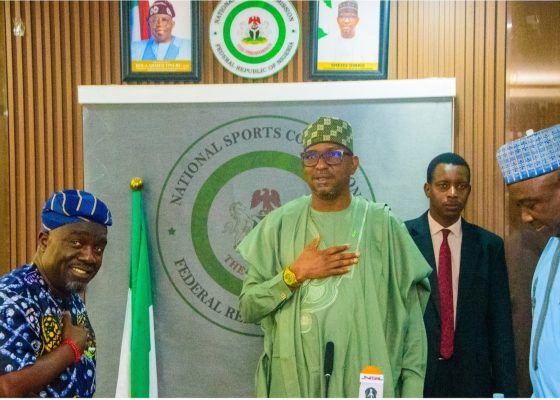
The amendments received support from National Sports Commission Chairman, Shehu Dikko, who said the previous electoral framework introduced in 2010 had become outdated and required revision to meet modern governance standards.
The published guidelines outline the election timetable, nomination procedures, eligibility criteria, and important deadlines for candidates seeking positions on the NFF Executive Committee.
The elections are expected to shape the future direction of Nigerian football, with the incoming leadership responsible for overseeing the national teams, domestic leagues, grassroots development, technical and refereeing programmes, as well as strengthening commercial partnerships and relations with international football bodies over the next four years.