
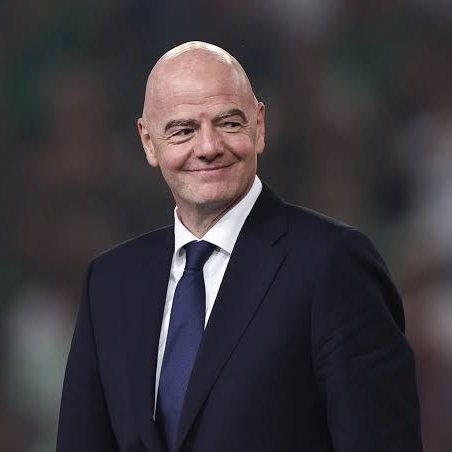
Six Arab national football associations, including Qatar and 2030 FIFA World Cup co-hosts Morocco, have thrown their weight behind FIFA President Gianni Infantino as pressure continues to mount on the Swiss administrator over his controversial private investment proposal.
The declaration of support came on Thursday as FIFA faces one of its most significant governance crises in recent years, following criticism from three major continental confederations over Infantino’s leadership and his now-aborted plan to attract private investment into FIFA competitions.
UEFA, the Asian Football Confederation (AFC) and CONCACAF have all expressed strong opposition to the proposal and called into question Infantino’s conduct, with the FIFA president seeking re-election at the organisation’s presidential election next March.
In a joint statement, the football associations of Qatar, Egypt, Lebanon, Morocco, Sudan and Mauritania said they had full confidence in Infantino’s leadership and his contribution to the global development of the sport.
“Recognising the important role of Arab football in bringing people together and strengthening cooperation among football associations across the Arab world, we … express our full support for Mr Gianni Infantino, president of FIFA, and reaffirm our confidence in his leadership and continued commitment to the development of football worldwide,” the six federation chiefs said.
They also praised Infantino for expanding opportunities for football associations across different regions.
“We deeply appreciate Mr Infantino’s sustained efforts to advance football globally, expand opportunities across all regions and strengthen the game’s role in bringing people and communities together,” they added.
“We look forward to continuing our close cooperation with him towards a stronger and more prosperous future for world football, expanding opportunities and further enhancing Arab football’s contribution to the global game.”
The statement was signed by Qatar Football Association president Sheikh Hamad bin Khalifa Al Thani, Egyptian Football Association president Hany Abo Rida, and the heads of the football federations of Lebanon, Morocco, Sudan and Mauritania.
Four of the six signatories — Al Thani, Abo Rida, Morocco’s Fouzi Lekjaa and Mauritania’s Ahmed Yahya — are also members of the FIFA Council.
The backing comes despite the growing disagreement between Infantino and some of the game’s most influential confederations.
Infantino’s controversial proposal involved separating the commercial rights to the FIFA World Cup and offering a 20 percent stake to private investors.
The plan was expected to generate approximately $4.2 billion, but FIFA eventually abandoned the proposal following widespread criticism.
The plan had also been linked to financial incentives for FIFA’s 211 member associations. Under the proposal, each association was expected to receive a $20 million grant during the next funding cycle, with the amount potentially doubling for federations that agreed to participate in the investment arrangement.
Some AFC members had previously expressed disappointment over the proposal, while the confederation itself was among the bodies critical of how the plan was handled.
Ireland Withdraws Support
While Infantino has secured the backing of six Arab football associations, his support base has also suffered a setback, with Ireland becoming the latest country to withdraw its endorsement of his re-election bid.
The Football Association of Ireland (FAI) said its board had decided to rescind a letter of support issued earlier in the year.
“Following an FAI Board Meeting, the decision was taken to rescind the letter of support that the association supplied earlier this year.
“It has since written to FIFA to explain its reasoning,” the FAI said.
The association added that although it appreciated FIFA’s assistance to Irish football, recent developments had raised concerns over governance, transparency and consultation.
“The association is grateful for the support that FIFA provides to Irish football, but recent events have raised significant concerns regarding governance, transparency and the lack of meaningful consultation,” it said.
Infantino Still Has Significant Support
The latest developments underline the increasingly divided nature of the FIFA presidential race.
Following a crisis meeting in Morocco last week, FIFA apologised to its 211 member associations over mistakes in the way the private investment proposal was handled and maintained that Infantino continued to enjoy the support of the organisation’s leadership.
The Confederation of African Football (CAF) has also backed Infantino, giving the incumbent an important source of support ahead of the election.
Although UEFA, AFC and CONCACAF collectively represent 136 of FIFA’s 211 member associations and have taken a critical position, the backing from individual national federations demonstrates that the presidential election is unlikely to be determined entirely by continental bloc voting.
Each FIFA member association has one vote, meaning national federations retain the final say regardless of the position adopted by their respective confederations.
Infantino would require a simple majority of 106 votes if he faces only one opponent in the election. However, if three or more candidates contest the presidency, he would need to secure a two-thirds majority — 141 votes — in the first round.
With the election still months away, the growing number of public endorsements and withdrawals suggests that the contest is likely to become increasingly intense as FIFA’s member associations weigh the future direction of world football and the leadership of the organisation.