
…Says Public Funding Is Key to League Growth
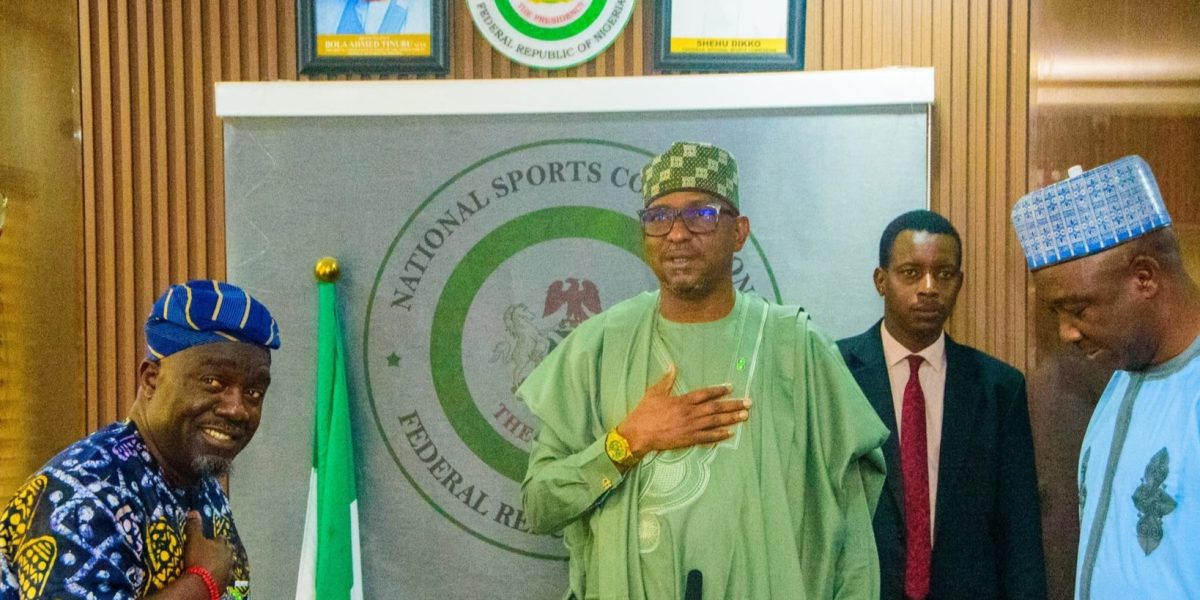
Chairman of the National Sports Commission (NSC), Mallam Shehu Dikko, has defended the Federal Government’s financial intervention in Nigerian football, insisting that government support is essential to reposition the Nigeria Premier Football League (NPFL) and make it globally competitive.
Speaking amid criticism over the Federal Government’s decision to invest in the domestic league, Dikko argued that successful football leagues around the world benefited from government backing in their formative years.
The former Chairman of the League Management Company (LMC), who oversaw the league between 2013 and 2022, said his administration struggled due to a lack of political support despite efforts to attract sponsorship.
“We would have been accused of negligence if we failed to take action, but now that we are doing what is necessary, some people are opposed to it,” Dikko said.
“If I had enjoyed this level of government support during my time as league chairman, we would have taken the league to a much higher level.
“Throughout my tenure, not a single kobo came from government to support the league. Instead, some government officials discouraged sponsors from partnering with us.”
He added that successive complaints about the poor state of the domestic league made government intervention unavoidable.
“We have all complained that the league needs support. Now the administration of President Bola Ahmed Tinubu has decided to intervene, yet some people are criticising the move.
“As a government, our responsibility is to provide the enabling environment for sports to thrive, whether through direct or indirect intervention.”
NPFL Needs Greater Investment
Dikko revealed that the NSC had successfully secured substantial private sector funding for other sporting events and believes the same approach can transform Nigerian football.
According to him, the Commission recently secured N5 billion from a single sponsor for the National Sports Festival following innovations introduced during the last edition in Abeokuta.
He said similar reforms could attract major investors to the NPFL.
“We are investing N2.5 billion while pushing for a minimum wage of N2 million for players because we must make the league a more attractive product for investors.
“We already have commitments from top-tier sponsors for our school sports programmes, and the funding pledged is greater than the entire annual revenue generated by the NPFL.
The league should be far more lucrative than it currently is, and that is why we must work closely with the Nigeria Football Federation and the NPFL.”
Lessons From England, South Africa and Morocco
Dikko dismissed claims that thriving football leagues operate without government support, citing examples from England, South Africa and Morocco.
He said the British government invested £200 million when the English Premier League was launched in 1992, adding that the investment now generates billions of pounds annually in tax revenue.
He also noted that the South African government indirectly supports its domestic league through the South African Broadcasting Corporation’s acquisition of free-to-air television rights, while Morocco provides financial assistance to clubs, upgrades stadium infrastructure and supplies outside broadcast vans.
According to him, similar investments in Nigerian football will eventually stimulate the country’s economy.
“The money government is putting into the league will return to the economy. We want a truly professional league where players are properly remunerated and thousands of jobs are created through sports.”
Olopade Backs Dikko’s Vision
NSC Director-General, Hon. Bukola Olopade, expressed confidence that Dikko possesses the experience needed to transform the domestic league.
He said Dikko understands the challenges facing Nigerian football better than most administrators because of his previous leadership of the league.
“If the domestic league does not improve under Mallam Dikko, then many questions should be asked because he knows where the problems are and understands what needs to be done. We also have a President who is determined to fix the sector.”
NFF President Urges Stakeholders to Support Reforms
President of the Nigeria Football Federation (NFF), Alhaji Ibrahim Gusau, also appealed to stakeholders and the media to support the current administration’s efforts to revive the domestic league.
He recalled occasions when prospective sponsors withdrew after allegedly receiving discouraging signals from government officials.
“We now have a government that wants to support the development of our league. Rather than discourage the initiative, everyone should support it because it is in the interest of Nigerian football.”
Club Owners Welcome Government Support
Chairman of the NPFL Club Owners Association, Sir Okey Kpaluku, commended the National Sports Commission and the Federal Government for intervening in the league.
He stressed that sustainable football development requires substantial financial investment and argued that government support is often the catalyst needed to attract private sector participation.
“You need money to run a successful league. Without government commitment, it becomes very difficult.
“Private investors usually come in after government has demonstrated confidence in the product.
“We must first make the league attractive, and on behalf of NPFL clubs, I appreciate the Federal Government for this intervention,” Kpaluku said.
The renewed push by the National Sports Commission signals a broader strategy to strengthen the NPFL through increased funding, improved player welfare, enhanced commercial value and stronger partnerships with the private sector, with officials expressing confidence that the reforms will ultimately deliver long-term economic and sporting benefits for Nigeria.